Anthropic has published a robot exposure index that rates current robots’ ability to perform US job tasks, finding that they can handle 74% of physical task time in at least some circumstances but are cost-competitive with human labor for only 0.3% of all job tasks. For employers and workers, the result separates technical task coverage from near-term deployment: robots have footholds in driving, warehousing and other physical work, yet costs, environment constraints and missing skills still limit broad automation.
The study defines robots as autonomous physical machines that sense and act. Using O*NET data covering roughly 900 occupations and 19,000 task descriptions, Anthropic identified 7,594 physical tasks and used Claude to assess task requirements, locate evidence of relevant robots and estimate task-time shares.
How the index works
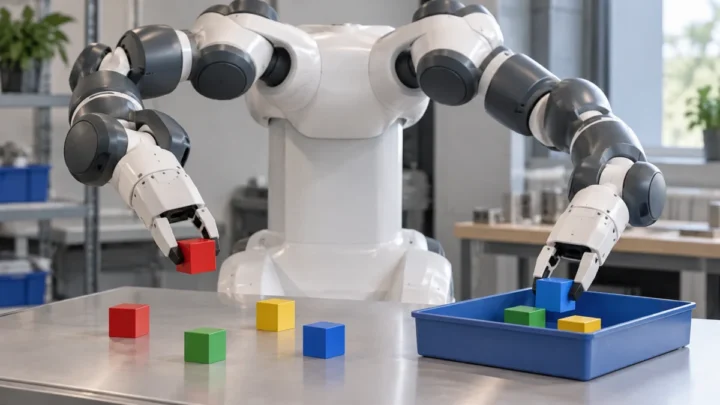
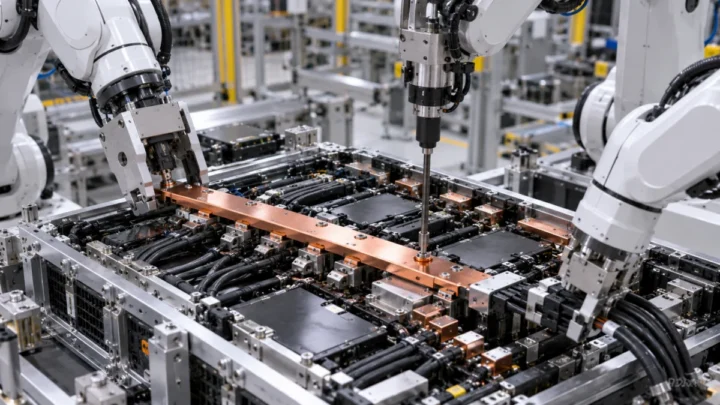
Tasks are placed on a four-level scale based on the least controlled setting where a robot can do the work: E0 for tasks robots cannot perform; E1 for purpose-built robotic environments; E2 for structured human facilities such as warehouses; and E3 for unstructured environments such as city roads. The index averages those ratings on a zero-to-three scale, weighted by estimated time spent on each task and occupational employment.
Anthropic says the environmental distinction matters because a system that needs a redesigned workplace is not equivalent to one that can operate where people normally work. Its process also requires judgment: terse O*NET descriptions can omit practical details. Claude generated examples of how tasks are performed, assessed cited robot deployments, sales or demonstrations, and considered reliability, error rates and speed. A task’s rating reflects the least structured setting in which robots can complete at least half of its time-weighted examples.
Trench digging illustrates the limitation. Autonomous equipment can cut linear trenches in open ground, but the study says robots cannot carefully excavate around buried pipes and cables. Because that harder work represents more of the task examples, Anthropic rates trench digging E0 overall.
Where exposure is concentrated
Physical work accounts for 46% of all task time in the analysis; cognitive and interpersonal work accounts for 54%. Across all work time, 23% consists of physical tasks robots can do in purpose-built environments, 10% in structured human workplaces and 1% in unstructured environments, while 12% is physical work robots cannot do. That yields the headline estimate: 34% of all work time, or 74% of physical task time, is robot-exposed in some setting.
Driving leads the exposure ranking. Nine of the 10 most exposed occupations with at least 20,000 jobs are vehicle-operator roles, and taxi drivers rank first at 2.2 out of three. Anthropic does not say autonomous vehicles have already displaced driving work at scale; rather, their operation on real roads gives such jobs a stronger current automation foothold than occupations where robots remain confined to controlled sites.
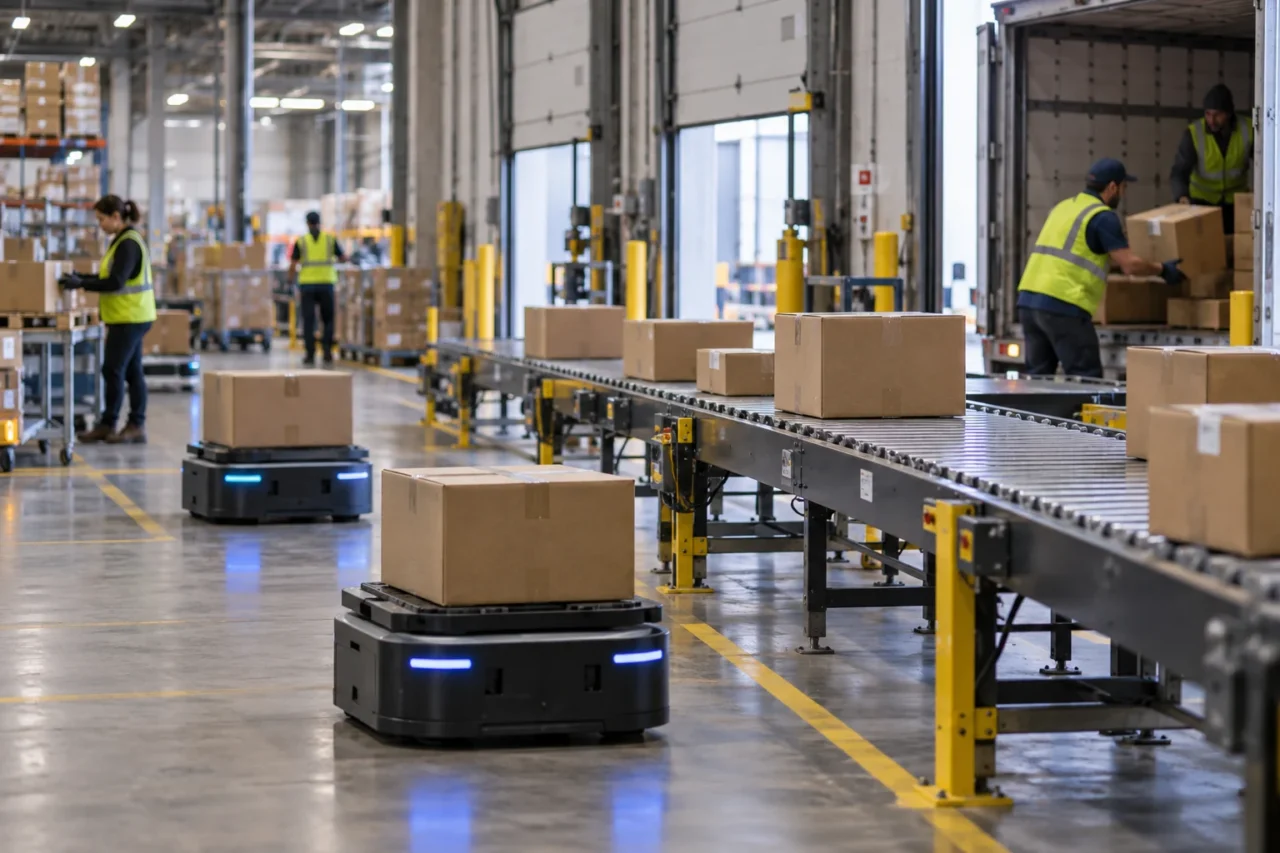
Warehouse work is a major E2 example: mobile robots can navigate loading docks and trailers, pick packages with suction cups and move them to conveyors. But high task exposure is not uniform exposure. Tapers have a score of 1.6 because a robot can scan, coat and sand drywall, while messy tape application remains unexposed. Recycling workers score 1.7 because robots can perform more than three-quarters of their task time in structured facilities, although their coverage is less adaptable.
Workers in the top exposure quintile were, in the study’s comparison with unexposed workers, 20 percentage points less likely to be female, 16 points more likely to be Hispanic and 55 points less likely to have a bachelor’s degree or higher. They earned about $30 less per hour and had more than twice the unemployment rate. These are descriptive associations, not evidence that robot exposure caused those outcomes. Anthropic’s historical backtest nevertheless reports that jobs more exposed to existing robots since 1977 subsequently saw larger wage and employment declines after accounting for industry trends and other potential confounders.
Robots widen the AI exposure map
Anthropic combines its robot ratings with an earlier LLM measure, defined as tasks for which an LLM could halve required time. The combined measure takes the higher of LLM exposure and robot exposure at E1 or above for each task. About half of work is exposed to LLMs alone in the study, rising to 81% when robots are included. Transportation and material-moving tasks rise from less than 15% LLM exposure to about 90% combined exposure.
That is a capability map, not a finding that these technologies can be integrated into every job. Personal care and service work has around 40% combined exposure, while hands-on, face-to-face and sometimes regulated healthcare tasks remain difficult for both LLMs and present robots. Anthropic estimates missing capabilities constrain adoption for about 70% of physical tasks, with manipulation a key gap; current regulation constrains 14%, and human preferences constrain about one-quarter.
Cost remains the central constraint
For exposed tasks, Anthropic estimated full annual deployment costs, including hardware, integration, installation, maintenance, software, energy, oversight, insurance and decommissioning, then compared them with task-level labor compensation. The study says these results are approximate: Claude was used for cost estimates, and aggregating task costs can double-count equipment or miss coordination costs.
Packers and packagers are the largest occupation the study classifies as exposed to cost-competitive robots. Anthropic estimates a multi-machine system costing more than $2 million to purchase and install could replace roughly 14 workers’ annual output. With annual operating costs of about $45,000 per worker replaced, this is about $2,500 less than the estimated annual cost of the robot-exposed portion of the job. The report says US employment in the occupation is about 560,000, but adoption frictions such as financing and regulation remain.
Most jobs are far from parity. Anthropic estimates robots needed to automate welders’ broader work would cost around five times more than human welders; cleaning robots are also several times more expensive despite lower worker pay. Its scenarios estimate that a 70% cost decline would be needed for robots to be competitive for 10% of current human work. At the roughly 3% annual price decline cited by the report, that would take about 40 years.
Those scenarios hold tasks and wages fixed and apply uniform cost and capability improvements, while omitting effects from regulation, preferences and changing wages. Anthropic also cautions that cost parity would not itself mean rapid job loss or productivity growth: remaining human tasks can become bottlenecks, and robot deployments can retain supervisory, exception-handling and repair work.
The paper, by Russell Legate-Yang and Maxim Massenkoff, presents the index, data release and methodological appendices as a way to track physical automation over time. Its narrower conclusion is that current capability provides a useful signal of where disruption may emerge first, while future robots could still exceed the study’s present-day scale. Source: Anthropic Research, “What work can robots do?”
Definition. Anthropic’s robot exposure index measures the least controlled environment in which current robots can complete a job task, weighted by task time and employment.
| Measure | Anthropic estimate |
|---|---|
| Physical task time robots can perform in some setting | 74% |
| All work time exposed to robots in some setting | 34% |
| All job tasks with cost-competitive robots | 0.3% |
| Physical tasks constrained by missing capabilities | About 70% |
| Cost decline needed for robots to compete for 10% of current human work | 70% |
Key takeaways
- Physical work accounts for 46% of task time in the analysis, and 34% of all work time is physical work robots can perform in some setting.
- The four-level index ranges from E0, where robots cannot perform a task, to E3, where they can work in unstructured environments.
- Driving occupations lead exposure because autonomous vehicles operate on real roads, though the study does not claim large-scale displacement has already occurred.
- Missing capabilities constrain adoption for about 70% of physical tasks; manipulation is identified as a key gap.
- Anthropic estimates a 70% robot-cost decline would be needed for robots to be competitive for 10% of current human work under its scenarios.
- Cost parity alone does not imply rapid job loss because supervision, exceptions, repair and remaining human tasks can still limit deployment.
FAQ
What does Anthropic’s robot exposure index measure?
It rates whether current robots can perform US job tasks and the least controlled setting in which they can do so, using a scale from E0 to E3.
How much physical work can current robots perform?
The study estimates robots can perform 74% of US physical task time in at least some setting, equal to 34% of all work time in its analysis.
Are robots currently cost-competitive for most jobs?
No. Anthropic estimates robots are cost-competitive with human labor for only 0.3% of all job tasks.
Why does the setting matter for robot exposure?
A robot that works only in a redesigned, purpose-built environment is not equivalent to one that can operate in ordinary human workplaces or unstructured settings.
Which work gains the most exposure when robots are added to LLMs?
Transportation and material-moving tasks rise from less than 15% LLM exposure to about 90% combined exposure in the study.
Does cost parity mean robots will quickly replace workers?
No. The report says remaining human tasks, supervisory work, exception handling and repair can still slow job loss or productivity gains.